Why it Matters That George Washington Walked away from Power
Foundations of Freedom

Audio By Carbonatix
By Amber Ginter, Crosswalk.com
Known as a Founding Father and the first president of the United States, George Washington shocked society when he made one of the most consequential decisions in American history: Choosing not to seek a third term as president. While most historical figures and leaders spend their careers seeking greater influence, George Washington did the opposite. Shortly after helping win a revolution in 1796, Washington displayed leadership not by stepping up, but by stepping away. According to his farewell address, this decision wasn’t easy, but necessary. Frustrated by political attacks, hostile press and appearing as a “God,” Washington longed for a simpler life as a citizen farmer. According to The Farewell Address, “Washington had always intended to depart the presidency once he felt the Constitution was well-established and the country was on solid footing. To Washington, that time had come.” Because he believed America had reached a place of stability, Washington believed it was time to step away. But not without first offering an urgent plea:
“The name of American, which belongs to you, in your national capacity, must always exalt the just pride of patriotism more than any appellation derived from local discriminations.”
In summary, Washington’s farewell address encouraged America to:
- Strive for unity
- Uphold the Constitution
- Beware of political parties
- Maintain morals
- Value education
- Balance the budget
- Avoid foreign entanglement
- Forgive his mistakes
While many were in favor of his resignation (a peaceful transfer of power would result), others noted the address was a cop-out. This decision wasn’t just unusual, but striking. Washington’s choice wasn’t just a political decision; it was a reflection of authority, humility, and purpose even amidst power, popularity, and national trust. The goal of any president (or person in a position of leadership) is to serve the nation, not themselves. At its core, power is about stewardship and not possession, whether you’re in a position of leadership or not. America was not (and still isn’t) built on permanent rulers. It was built on ordered liberty, self-government, and leaders directed by duty.
In Matthew 20:25-25, we read about true servant leadership. Micah 6:8 says all people are to: “… act justly and to love mercy and to walk humbly with your God” (NIV). Luke 12:48 explains that with greater power comes greater responsibility. Romans 13 says we’re all subject to governing authorities. To summarize, all authority belongs to God, but human leaders are temporary stewards of a gift He’s given them. Faith teaches that authority is stewardship, not a possession. Leaders are accountable to God for how they use power. George Washington modeled servant leadership with humility because he recognized that setting a precedent for the future was more important than pleasing people in a moment. To him, the presidency was never a lifetime appointment. So, why does this matter today?
I won’t pretend to be a political expert, but I do believe that leadership is still tested by how people use the power they’ve been given. In order for our nation to be successful, we need leaders who:
- Rule with integrity.
- Have respect for limits.
- Prioritize Godly character.
- Serve others over themselves.
- Strive for peace.
When leaders rule in this way, republics survive because the leaders respect limits and their citizens defend them. Even beyond politics, we all steward influence in our jobs, lifestyles, families, churches, etc. Life has never been about obtaining influence, but faithfully using any influence you do have. While George Washington’s legacy remains, perhaps it's for reasons we don’t always highlight: not the power he possessed, but the choice he made to do what would be best for society. Real freedom is preserved not by always doing more, but by realizing our limits. We exercise authority not as something to gloat for personal gain, but as trust from God. Washington’s lesson still stands: a republic is preserved when power has limits, leaders have character and public service remains a duty to God and country, not a path to personal rule.
Foundations of Freedom Week 6 Video:
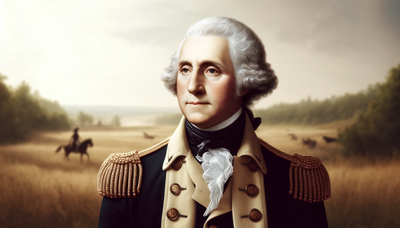
Photo Credit: ©DALL-E, SWN created using AI
This article is part of Salem Media's Foundations of Freedom series.
 Amber Ginter is a teacher-turned-author who loves Jesus, her husband Ben, and granola. Growing up Amber looked for faith and mental health resources and found none. Today, she offers hope for young Christians struggling with mental illness that goes beyond simply reading your Bible and praying more. Because you can love Jesus and still suffer from anxiety. You can download her top faith and mental health resources for free to help navigate books, podcasts, videos, and influencers from a faith lens perspective. Visit her website at amberginter.com.