A Wisconsin Farmer Learns First-Hand the Costs of Trump's Tariffs
News > Business News

Audio By Carbonatix
7:00 PM on Wednesday, April 9, 2025
By Barn Raiser
Chicago, IL (Barn Raiser)
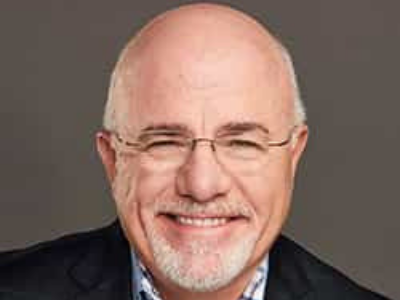
Mark Peck, a fourth-generation farmer, in Chippewa Falls, Wisconsin. (Courtesy of Mark Peck)
My local farm supply business in Cadott quoted me $25 to treat an approximately 50-pound bag of soybeans with a coating that includes heads up (for white mold) nematiside inoculant, fungicides and insecticides to protect the seedlings. For the 560 bags of seed I would need this seemed high, so I sought a better, cheaper alternative.
Online, I found a domestically sold seed treater for $50,000, while a computer-controlled model cost $63,000. No wonder treatment costs $25 a bag, I grumbled.
Then I saw an ad for a seed treater on Made-in-China.com. The company quoted me $7,800 for their seed treater. With additional options like computer control, an extra biologicals bucket, a storage cabinet and a top hopper added in, plus shipping, the machine came to $12,810. Finally, something I can afford, I thought.
However, when I asked about tariffs, Cathy, the factory sales rep at Kaifeng Machinery, in Kaifeng, Henan province, was hesitant. Tariff rates fluctuated so much that no one knew what Trump would impose next. In February and March, China had responded in kind to Trump's tariffs, levying duties on American agricultural machinery and key farm exports like soy beans.
Talking to a customs broker before Trump's April 2 tariff announcement speech, and shortly before the factory finished manufacturing the seed treater. I learned the cumulative tariff at the time totaled 45%, including 25% from Trump's tariff war in 2018 plus 20% imposed by Donald Trump on March 4. That added $5,764.50 to my cost, bringing the total to $18,574.50.
Then in the wake of Trump's so-called "Liberation Day" (April 2), which imposed an additional 34% tariff on Chinese imports, China suspended some U.S. agriculture imports like sorghum and poultry.
In response, on April 8, Trump announced he would raise tariffs on China to a total of 104% if China did not remove its tariffs, which China refused to do. Consequently, on April 9 (my birthday), thanks to Trump, the total cost of my seed treater had risen from $12,810 to $26,132. (Later that day, Trump announced he would pause the additional "Liberation Day" tariffs for 90 days. At the same time he raised the cumulative tariff on China to 125%, while keeping in place the 10% universal tariff and the 25% tariff on Mexico and Canada.)
This kind of uncertainty and the skyrocketing costs associated with these tariffs means that it will take me an extra four years to pay for the treater, and, consequently, I will have less money to invest elsewhere in my business. Multiply this millions of times nationwide, and the result is trillions of dollars lost, with fewer jobs, products, goods and services for everyone in the country.
As a farmer, I think tariffs serve an important role in our economy. Few nations can compete with U.S. agricultural production, yet virtually every country knows it is important to have the ability to feed themselves in the event of a major supply chain disruption. There are three scenarios where tariffs can make sense.
In contrast to these scenarios, Trump's approach is to place a 10% across-the-board tax on all imports, while placing additional tariffs on imports from about 90 countries (although these additional tariffs are paused for now). Agriculture is highly dependent on trade, so it is important to examine its impact on farmers.
On the whole, raw agricultural inputs, including fertilizer, tractors, planters, crop protection products and seed, are cheaper to import. At the same time, few nations can compete with the United States in the volume, quality and production cost of agricultural outputs. As a nation we buy our agricultural inputs and sell our agricultural outputs.
The problem with declaring a global trade war is that inputs will cost much more, while retaliatory tariffs on U.S. exports make agricultural outputs more expensive abroad.
Some may be thinking: "What about domestic producers of agricultural inputs? They will keep the price down! After all, Donald Trump just wants to promote well-paying United States industry." The answer to that is: "No! They will not keep prices down." The rule of business in a capitalist system is to make as much money as you can. If your foreign competitor's raw inputs cost 25% more, you will charge 24% more to ensure that your business can not only compete but also maximize your profits.
For example, Canada placed a 25% retaliatory tariff on U.S. grain. The result is that Canadian buyers will turn to another country such as Brazil, where grain costs only 5% more than Canadian grain due to transportation. This is still far cheaper than paying an additional 25% tariff on U.S. grain. Consequently, American farmers will have to drop their prices by at least 20% to compete with the cheaper Brazilian grain.
Even before Trump's latest trade war, the average corn farmer in the U.S. lost $100 to $125 per acre due to rising input costs, while prices for major commodity crops like soybeans and corn have plunged roughly 40% since 2022. This was partly the result of Trump's first trade war, which allowed Brazil and Argentina to as major competitors to the U.S. in the global soybean market.
Under Trump's new tariffs, some estimate farmers could lose $300 to $400 per acre. A 25% increase of production costs and 20% in revenue would result in a 45% hit to farmers' margins, which will devastate the industry.
Losses of this scale have not been seen since the Great Depression when agriculture collapsed, and widespread famine followed. Malnutrition from the crisis was so severe that one-fourth of World War II draftees were rejected due to poor health.
Regardless of opinions on the policies of Franklin Delano Roosevelt and the New Deal-era Democrats, FDR did everything he could to bring food and other necessities to people. By contrast, today's leadership has shown little concern for the consequences of reckless tariffs. Without a strategic purpose, these broad tariffs will continue to harm businesses, farmers and the entire U.S. economy.
This story is provided as a service of the Institute for Nonprofit News’ On the Ground news wire. The Institute for Nonprofit News (INN) is a network of more than 475 independent, nonprofit newsrooms serving communities throughout the US, Canada, and globally. On the Ground is a service of INN, which aggregates the best of its members’ elections and political content, and provides it free for republication. Read more about INN here: https://inn.org/.
Please coordinate with [email protected] should you want to publish photos for this piece. This content cannot be modified, apart from rewriting the headline. To view the original version, visit: https://barnraisingmedia.com/farmer-cost-of-trump-tariffs-wisconsin/