Why American outdoor gatherings keep moving inside
Lifestyle

Audio By Carbonatix
10:00 AM on Monday, September 28
By Paul Peterson for The Luxury Pergola, Stacker

Americans are lonelier than ever. The U.S. Surgeon General, Dr. Vivek Murthy, declared a national epidemic in 2023, warning that about half of U.S. adults are experiencing considerable levels of loneliness. The problem had been building for years, and the pandemic only made it worse. Murthy has also been blunt about the fix: The most effective way to connect with another person is still in person. The backyard cookout and the long evening on the patio are some of the easiest ways people still do that without needing a reason.
Yet even those gatherings get impeded, often for reasons unrelated to the company. A new survey of 1,000 U.S. adults from The Luxury Pergola found that 71.2% of hosts have skipped or canceled an outdoor gathering because of a heat wave, a figure that holds across age and income alike.
Understandable, sure. But when the weather is what's deciding whether people gather at all, the question isn't whether to gather, but how.
Key Findings
- 71.2% of hosts have avoided hosting outdoors during a heat wave in the past year. Among Gen Z, that jumps to 80%
- 55.4% want a covered area that stays dry in the rain, ranking it the top fix ahead of shade (42.4%), bug control (39.2%), and cooling (36.5%).
- 52.8% move everything inside the moment the weather turns. Among households earning $250K or more, 88.2% do.
- 46.2% of Gen Z say their gatherings get cut short "very often" or "sometimes," more than triple the 13.6% of baby boomers.
- 28.3% say guests start heading inside in the early evening, "when the bugs come out."
- 28.4% name humidity as their worst heat-related hosting problem, just ahead of direct sun (24.2%).
- 62% say a cold drink and ice setup is what actually keeps guests outside in the heat, the runaway top answer.
The Heat Wave Has Become a Scheduling Problem
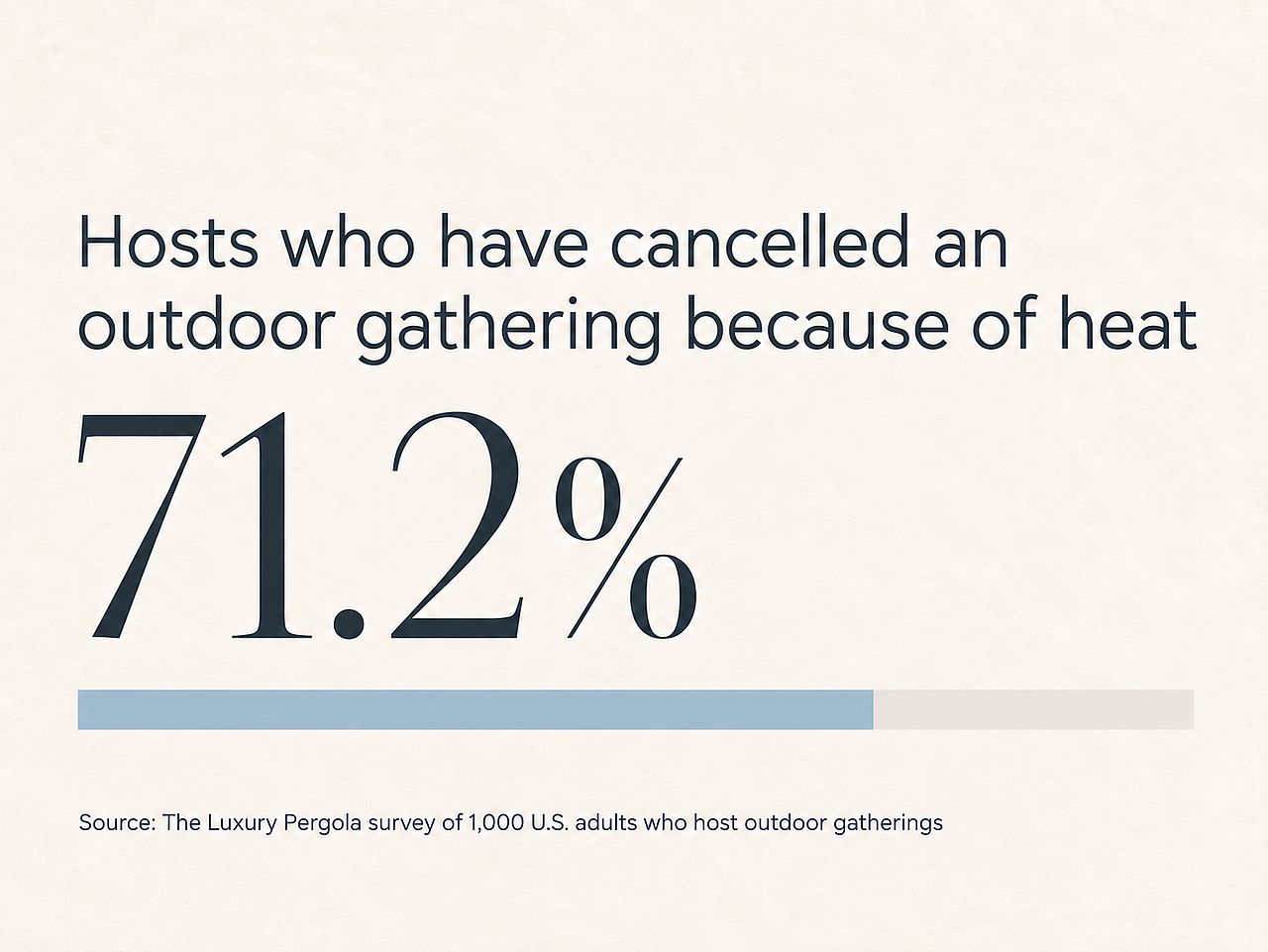
Per the survey, 71.2% of hosts say they've called off an outdoor gathering because it was simply too hot, and external data tracks aligns.
According to the EPA, the average major U.S. city went from about two heat waves a year in the 1960s to six per year in the 2010s and 2020s. The heat waves are also lasting longer: The EPA's 2024 update finds the U.S. heat-wave season now runs 46 days longer than it did in the 1960s. Six extra weeks of it land squarely on the months Americans most want to be outside.
So what is it about the heat that actually drives people indoors? Not the sun, it turns out. Asked to name their biggest heat-related hosting problem, 28.4% of hosts pointed to humidity, ahead of direct sun at 24.2%. The gap widens with age: Among hosts 62 and older, 39% named humidity. You can block the sun with shade, but humidity sits in the air that nothing can reach, which is why the problem feels so hard to host around.
The result is a scheduling problem. Hosts are trying to work around the weather, but the window keeps shrinking.
Rain Coverage Is the Upgrade Americans Want Most, and It Isn't Close
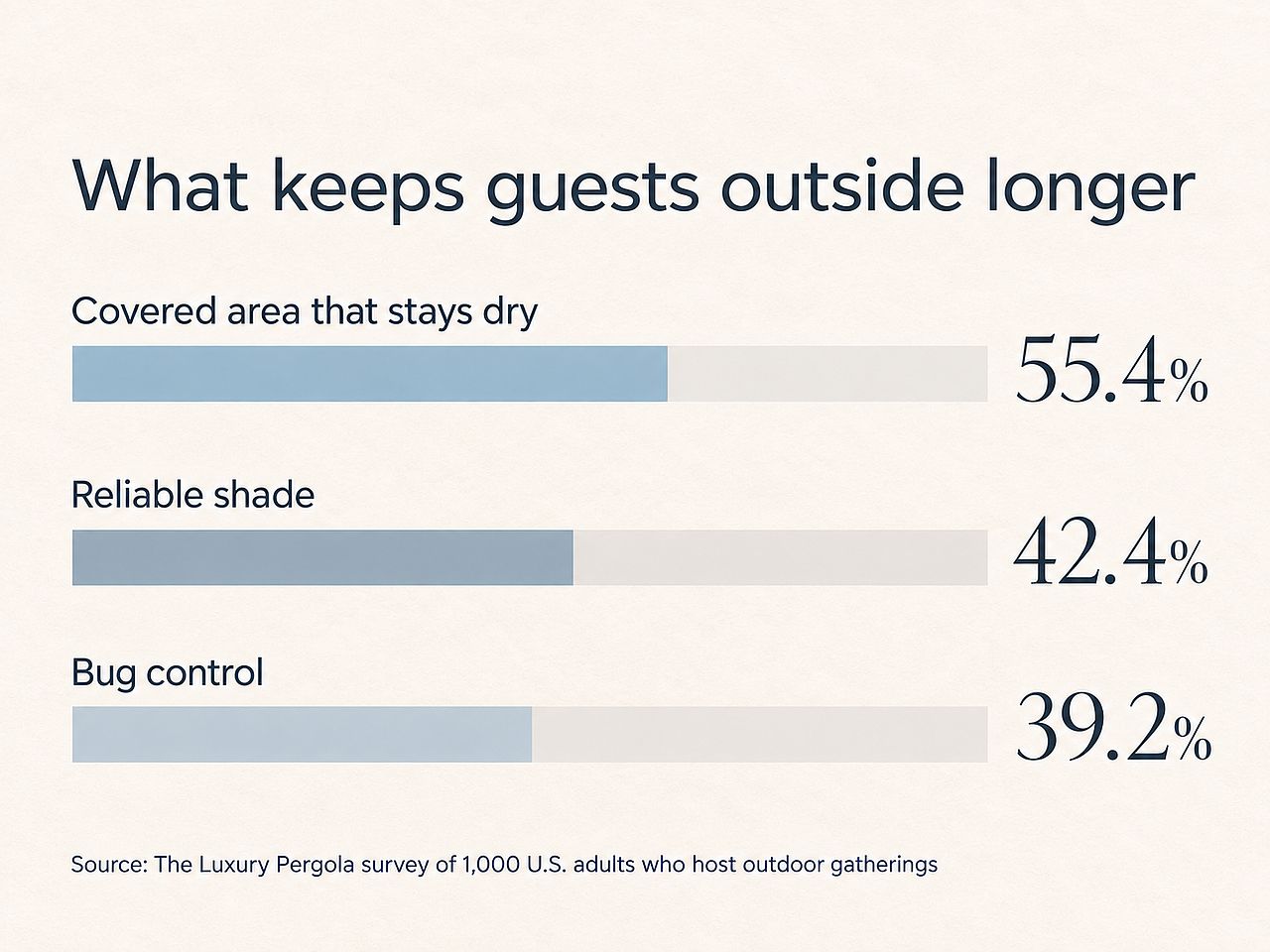
Asked what would keep guests outside longer, more hosts named a covered area that stays dry in the rain than anything else: 55.4% selected it, with reliable shade close behind at 42.4% and bug control at 39.2%.
What separates rain from the rest of that list is the stakes. Lack of shade, bugs, and heat are discomforts, and people will tough them out. A sudden downpour is different. It doesn't make the party less pleasant; it ends it. Anywhere summer afternoons can turn on a dime, that's the difference between a gathering that rides out a cloudburst and one that has to move indoors.
Half of Hosts Bail the Moment Conditions Slip
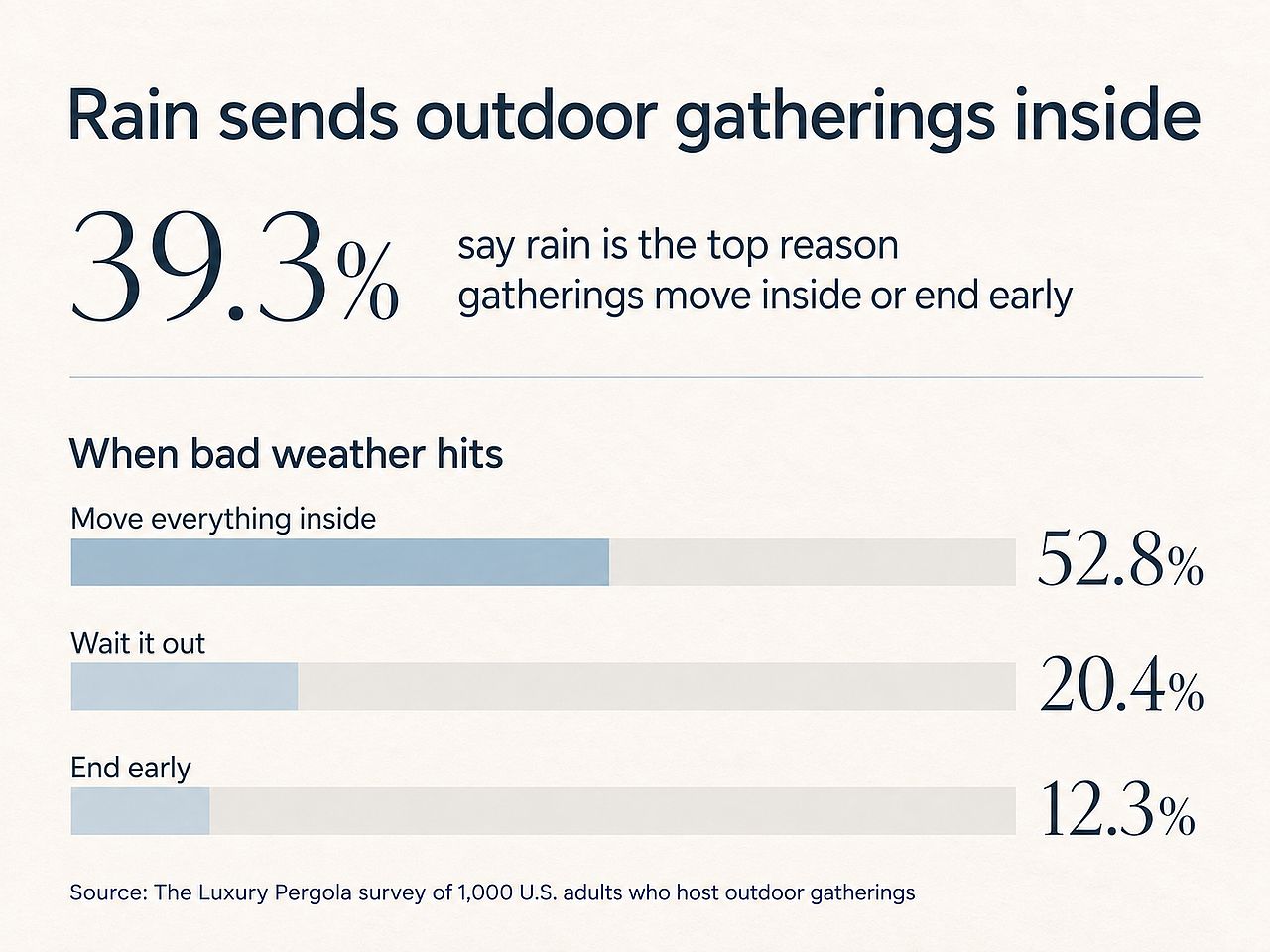
That demand for rain coverage makes more sense alongside what actually ends these gatherings. Asked what most often forces a party inside or cuts it short, 39.3% of hosts named rain or the threat of it, the single biggest trigger.
When an outdoor gathering starts to fall apart due to weather, 52.8% of hosts move everything inside immediately. Waiting it out (20.4%) and ending early (12.3%) trail well behind.
This response is strongest where you’d least expect it: 88.2% of households earning $250K or more say they relocate indoors the moment conditions slip, the most decisive response of any group. The hosts with the most resources to throw at the problem are the quickest to abandon the evening outdoors, because they have the most comfortable indoor space to fall back on.
What the 88.2% shows is the absence of a middle option. When the weather turns, hosts are choosing between heading inside and giving up; staying outside in comfort isn't on the table. The households that retreat fastest are just the ones with the easiest fallback.
Gen Z Loses the Most to Weather
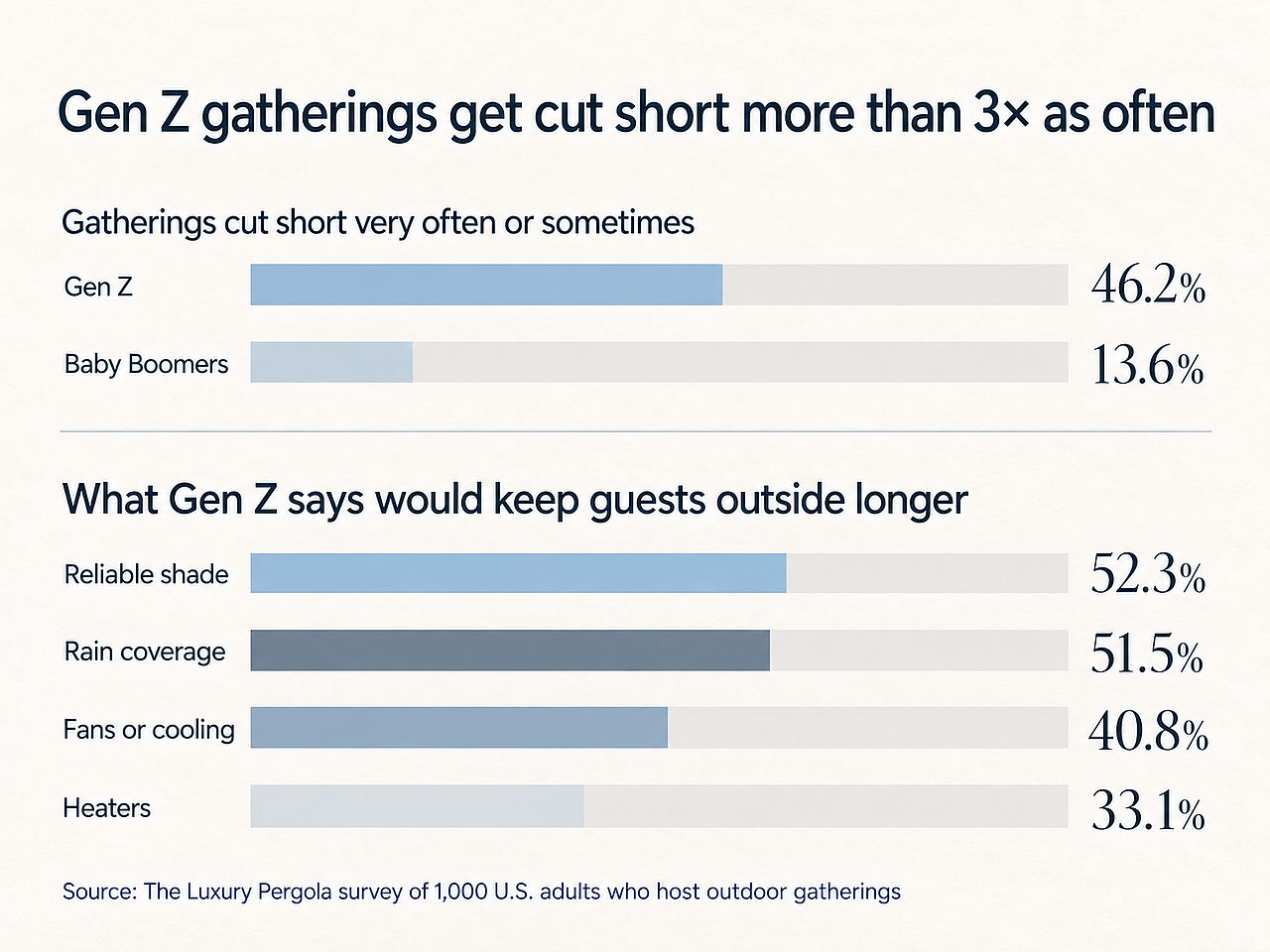
According to the survey, 46.2% of Gen Z hosts say their outdoor gatherings get cut short "very often" or "sometimes." Among baby boomers, only 13.6% say the same, a gap of more than three to one.
The reason has little to do with luck. Gen Z is hosting without the infrastructure their parents accumulated over decades: the established shade trees, the covered patios, the built-out yards. Enthusiasm gets the invitations sent, but it doesn't keep the rain off, so Gen Z is the generation most often watching a good night fall apart.
Yet Gen Z wants that infrastructure. Asked what would keep guests outside longer, they named reliable shade (52.3%), a covered area that stays dry in the rain (51.5%), fans or cooling (40.8%), and heaters for cooler weather (33.1%) among their top fixes. The heater figure is telling: Only 13.6% of Boomers said the same. Gen Z is thinking past summer, trying to make the yard work in cooler months, too.
The Bugs Arrive Right as the Party Peaks
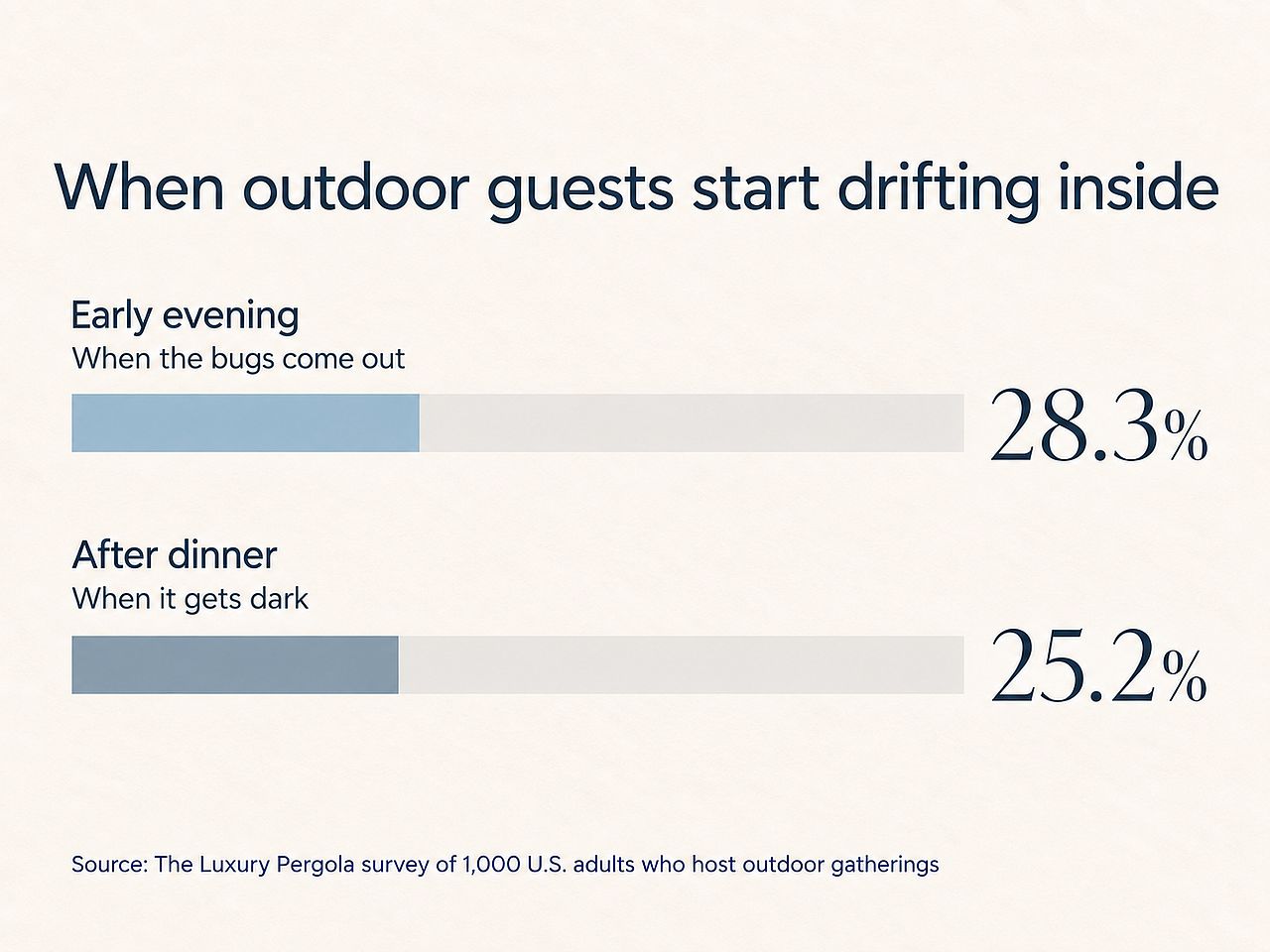
There's a specific moment when summer gatherings tend to break, and it occurs before sunset. Per the survey, 28.3% of hosts say guests start drifting inside in the early evening, "when the bugs come out," just ahead of the after-dinner darkness at 25.2%.
The timing can be the frustrating part. Most hosts plan around it: 68.2% say they hold their summer gatherings in the late afternoon and evening, waiting for the day to cool down. That early-evening window is the one they deliberately chose, when the heat has broken, the light is good, and people have settled in. Then the bugs come out, and guests start drifting indoors right as the evening should be hitting its stride.
The Two Fixes Hosts Swear By
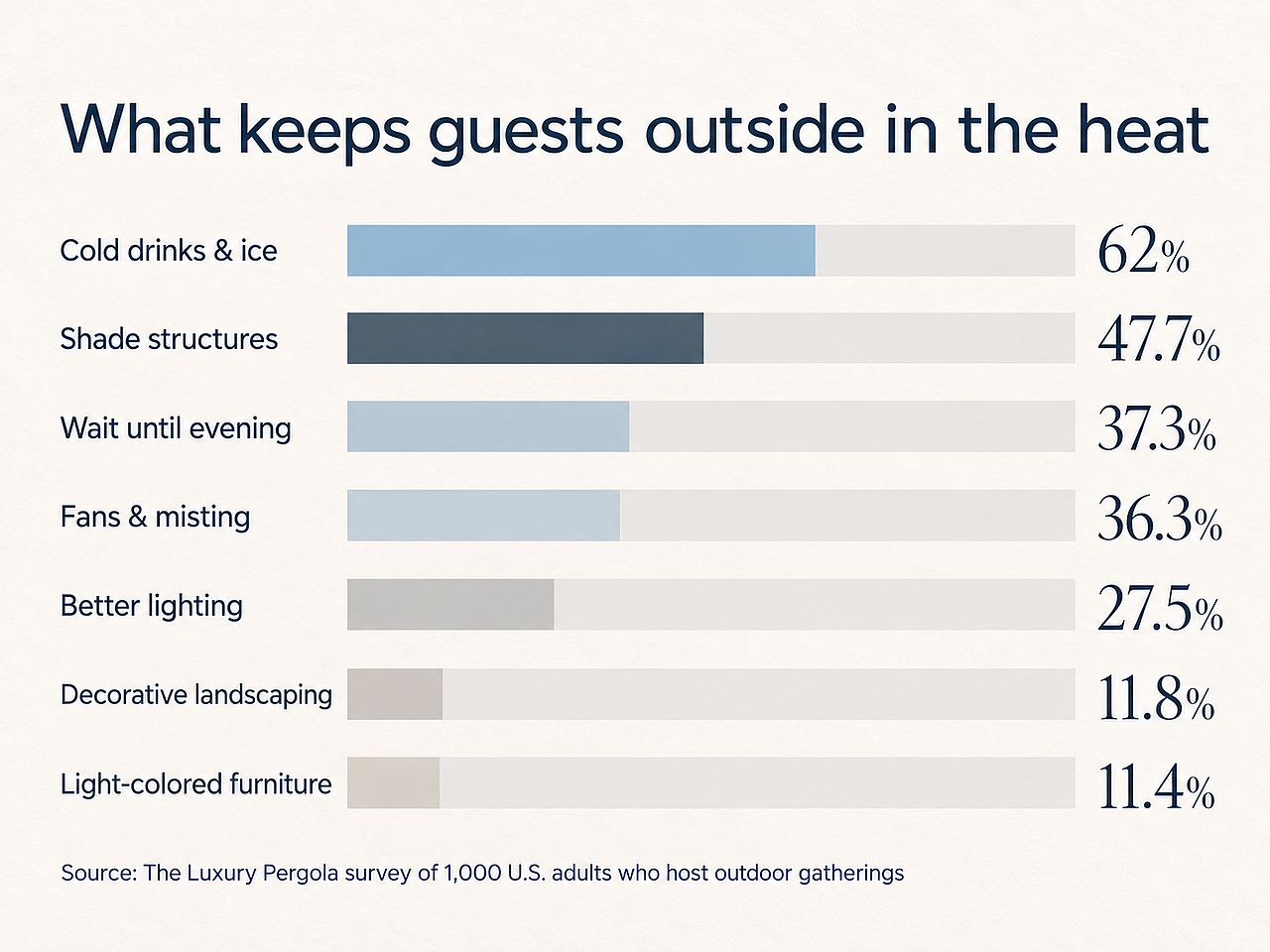
Cold drinks and shade structures were the two things hosts named most by respondents, and by a clear margin. Per the survey, 62% point to a setup with cold drinks and ice as the reason guests stay outside in the heat, with shade structures close behind at 47.7%. Fans and misting (36.3%) and waiting until evening (37.3%) trail well back.
What stands out is where hosts don't spend their attention. The fixes aimed at ambiance fall to the bottom: light-colored furniture (11.4%) and decorative landscaping (11.8%) barely register, and better lighting (27.5%) ranks well below shade and cooling. Hosts aren't trying to stage a perfect-looking evening. They're trying to keep guests comfortable enough to stay in their seats.
The ordering says something useful. A cooler solves the moment, and it's the easiest place any host can start. But the two fixes at the top work best together, the drinks keeping people refreshed and the shade giving them a reason to stay put. One is something you restock for the afternoon. The other is something you build once and stop thinking about.
Keeping People Together, Longer
It’s a familiar moment for the hosts in the survey. The light's good and the company's good, and yet, almost on cue, the evening relocates indoors or just ends. But that moment isn't inevitable. It's the predictable result of a yard that wasn't built to hold people once the heat, the rain, or the early-evening bugs arrive.
In a country where half of adults report loneliness, an evening that runs two hours longer is not a small thing. It's the difference between seeing people just long enough to say “hi,” and actually spending time with them. The hosts who stay outside longest have figured out something the rest learn the hard way: Comfort outdoors rarely comes down to luck or weather. It's decided long before the guests arrive, in how the space was built in the first place.
Methodology
To understand how Americans approach outdoor hosting and the weather conditions that cut their gatherings short, The Luxury Pergola surveyed 1,000 U.S. adults across the country who host outdoor gatherings. Participants answered a series of questions about how often weather disrupts their events, what forces everyone inside, how they respond when conditions turn, and what would keep guests outside longer. Responses were analyzed by demographic groups, including age, gender, ethnicity, household income, and education level, to identify trends and disparities. The survey was conducted via Pollfish.
This story was produced by The Luxury Pergola and reviewed and distributed by Stacker.